

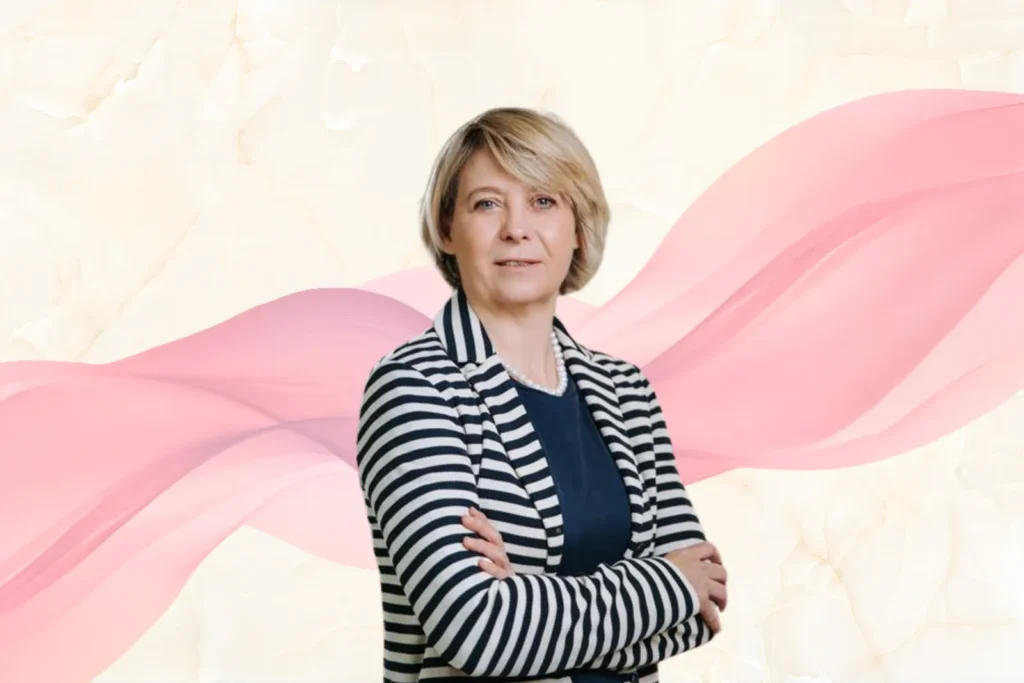
In this exclusive interaction with Catalyst, Sasa Lavric, CEO and Co-Founder of Neuro Muss, shares the deeply personal journey that inspired the creation of the company, and reflects on how lived experience, empathy driven innovation, and resilient leadership are shaping the future of home-based rehabilitation and patient independence.
Many founders start with market opportunity. You started with lived experience. How did that change the way you approached building a tech solution?
When stroke hits someone you love, it changes everything overnight. The person who used to protect you suddenly depends on you. It’s a shock — and an urgent call to act.
When my mother had a stroke, I didn’t see a “market opportunity.” I saw her pain, her swollen hand she couldn’t move but could still feel, and my father already overwhelmed with caregiving. I wanted to help — not as a founder, but as a daughter.
Because I love technology, sports, and smart gadgets, I started thinking: what could she use independently? What would reduce her pain, give her dignity, and not add more burden to my father?
That lived experience shaped everything. We didn’t build NewPulse from a tech-first perspective. We built it from the user’s reality — and from the caregiver’s reality. It had to be simple, independent, and sustainable at home.
For me, innovation wasn’t about complexity. It was about restoring dignity without adding pressure to families.
Healthcare systems globally are under strain. How can technology realistically bridge the gap between demand and available care?
Europe and other developed regions are facing a serious shortage of healthcare professionals, while labor costs continue to rise. At the same time, people are living longer — which means more chronic conditions and more long-term rehabilitation needs.
The system simply cannot provide daily or multiple daily therapy sessions for everyone who needs them.
Technology can’t replace doctors or physiotherapists — but it can extend their reach. The only realistic way to support patients who require frequent rehabilitation is through safe, affordable medical devices they can use at home.
For that to work, these technologies must be cost-effective, easy to use, and geographically accessible. When therapy moves from hospital to home, we reduce pressure on healthcare systems while giving patients more consistency and independence in their recovery.
That’s how technology bridges the gap — not by replacing care, but by scaling it.
As a woman leading a MedTech company, what unique challenges — or strengths — have shaped your leadership journey?
I believe women in healthcare often lead with experience, empathy, and a deep understanding of the end user. That’s not a “soft” quality — it’s a strategic advantage.
I didn’t start building this company from a spreadsheet or a market gap analysis. I started from a real problem — watching someone I love struggle after a stroke. From day one, NewPulse has been built around user experience — not only for the patient, but also for the caregiver. Dignity, simplicity, and long-term usability are at the center of our design decisions.
As a former athlete and a cancer survivor, I see challenges differently. I know how quickly life can change. But I also believe deeply in medicine, resilience, and persistence.
Building a medical device is a marathon, not a sprint — and I was trained for marathons long before I became an entrepreneur.
Engineering is still largely male-dominated. But one of the strengths women bring is a different lens on usability and design — how a device feels in real life, in someone’s home, in their daily routine. In MedTech, that perspective truly matters.
Do women founders approach innovation differently? If so, how?
I wouldn’t say women innovate better — but often differently.
Many women founders’ approach innovation from lived experience. We tend to start with the human problem before the technology. Instead of asking, “What can we build?”, we often ask, “What does this person truly need?”
There is usually a strong focus on usability, accessibility, and long-term sustainability — not just technical performance. In healthcare especially, that human-centered lens can make the difference between a product that works in theory and one that works in real life.
Women founders also tend to build more collaboratively. We are comfortable saying, “I don’t know — let’s find the right expert.” That creates stronger teams and more resilient companies.
So yes, the approach can be different. Often it’s less ego-driven, more impact-driven — and in MedTech, that matters.
What structural barriers still exist for women building technology startups?
There are still structural challenges, but I personally don’t experience them as barriers — more as realities of the startup world in general.
Access to capital can be competitive for everyone, and in deep tech it’s always demanding. Sometimes women founders may need to demonstrate credibility very clearly, especially in technical fields like MedTech. But I see that as part of building a strong foundation rather than as an obstacle.
What matters most is competence, resilience, and execution. When you have a clear vision, a strong team, and validated market need — especially with a solution that delivers measurable impact for people who truly need it — those factors speak louder than gender.
The ecosystem is also evolving. There is more awareness, more support programs, and more recognition of diverse leadership styles. I prefer to focus on building value and results — because in the end, innovation wins when it solves real problems.
How do mentorship and networks influence women in product leadership roles?
Mentorship and networks are incredibly important — not only for women, but especially in leadership roles where decisions carry significant responsibility.
I’ve been mentoring Slovenian startups for more than 10 years, and I’ve seen firsthand how strong guidance can shape successful companies. Good mentorship is invaluable. Sometimes it’s very practical — strategic advice, regulatory insights, investor introductions. Other times, it’s simply encouragement at the right moment, when you need perspective and reassurance to keep going.
In 2025, I participated in the EIT Health Women Entrepreneurship Bootcamp, and that experience was truly transformative. Beyond the knowledge, the network I gained continues to support me. We stay in regular contact, share connections, exchange insights, and support one another.
What legacy do you hope to build — not just as an entrepreneur, but as a changemaker in rehabilitation science?
I don’t just want to build a company — I want to help change how we think about rehabilitation. Rehabilitation should not happen only inside institutions. It can and should be effective at home. My hope is that my legacy will be bringing rehabilitation closer to people — making it less dependent on geography, financial status, or access to a therapist.
I want rehabilitation to become integrated into daily life: independent, accessible, and consistent — not limited to scheduled hospital appointments.
If our solution enables someone after a stroke to regain even part of their movement, reduce pain, or restore a sense of independence, that is the greatest possible impact.
As an entrepreneur, I want to build a sustainable and successful company — one that develops new medical devices and is a responsible, supportive employer. As a changemaker, I want to prove that small, mission-driven teams can drive meaningful progress in rehabilitation science — and that home-based therapy can become a new standard, not an exception.
Final Thoughts
As healthcare systems worldwide confront rising demand for rehabilitation and limited clinical capacity, technology driven solutions that extend care beyond traditional settings are becoming essential. Human centered innovation, grounded in real patient and caregiver experiences, has the potential to transform rehabilitation into a more accessible, consistent, and independent process. By combining empathy driven design with resilient entrepreneurship, MedTech innovators are helping shift rehabilitation from hospital bound therapy to a more sustainable, home-based model that empowers patients while easing pressure on healthcare systems.
About the Contributor
Sasa Lavric is a MedTech entrepreneur, CEO and Co-Founder of Neuro Muss, a Slovenia-based healthtech startup developing medical devices for hand function recovery and pain relief using principles of neuroplasticity. Her work focuses on restoring independence, mobility, and quality of life for people with impaired hand function.
She is recognized as an innovation leader in medical technology, neuroplasticity, and patient-centered device design, with EIT Health certification supporting the clinical relevance of Neuro Muss approach. Before founding Neuro Muss, Sasa spent over 10 years as Director of Inkubator Savinjske regije d.o.o., where she led innovation programs, supported early-stage startups, and built cross-sector partnerships. Sasa combines entrepreneurial leadership with lived healthcare experience to create accessible, home-based solutions for hand function recovery.
All Content Rights Reserved by Catalyst.