


That shift, from technical correctness to human centrality, is what product thinking really means. And in my fifteen years of working across healthcare, financial services, and digital ecosystems in Nigeria and the UK, I have come to believe that this shift is one of the most powerful contributions women are making to the future of technology.
Not because empathy is a female trait. But because women who have spent careers navigating systems not built for them develop an almost instinctive fluency in the gap between what a product promises and what it actually delivers. We feel that gap. And when we are given the tools and the authority to close it, remarkable things happen.
I have been fortunate to work at that frontier in several ways throughout my career. It was when I was at Diamond Bank, which had now been changed to Access Bank, that I learned a foundational discipline. This discipline here is the understanding of customers not just as data points but as people with complicated, context-dependent relationships with money.
I saw firsthand at Avon HMO and later AXA Health UK how digital transformation in healthcare goes beyond just digitising processes. Instead, it is more about reimagining the way people access care, how they navigate complexity, and how they’re being able to make decisions under pressure.
However, the project that most illustrates what I mean by product thinking was the MTN Nigeria Public Offer, the MTN Nigeria Public Offer is a digital-first platform that opened retail investment to everyday Nigerians who had previously been locked out of capital market participation. Beyond the technology challenge of leading an initiative like this, there’s also a design challenge, a trust challenge, and an inclusion challenge all at once.
The question we were really answering was this: how do you build something so intuitive, so trustworthy, and so accessible that a first-time investor in Nigeria feels confident enough to participate? That required thinking not just about the product’s features, but about the user’s fears. Their questions. Their prior experiences of financial systems that excluded or exploited them. It required, in short, human-centred thinking at every layer of the build.
That project became a benchmark for digital capital market participation in Africa; it also sparked the launch of InvestNaija by Chapelhill Denham. And I believe it did so precisely because it was built with the user’s reality, not just their demographic profile, at the centre.
This is what smart services require. It doesn’t have to be just about intelligence in the technical sense, algorithms, automation, data pipelines, but rather intelligence in the human sense. This is the ability to design systems that learn from real people, respond to real needs, and even create real value rather than simulating it.
Women are contributing to this in every sector. In health technology, in fintech, in enterprise software, in emerging digital ecosystems across Africa and beyond, women product leaders are asking the questions that turn good technology into essential technology. They are bringing enterprise design thinking and AI fluency not as separate capabilities but as integrated ones, understanding that the most powerful digital solutions are those where technical sophistication and human insight are genuinely inseparable.
I see this in the startups I advise. I see it in the conversations I have as a mentor with women navigating careers in product and technology leadership. Again and again, the women in these spaces are not just building features. They are building trust. They are building access. They are building the kind of institutional credibility that makes digital services something communities genuinely rely on rather than reluctantly tolerate.
This International Women’s Day, I want to name that contribution clearly. Product thinking, the discipline of building technology around human need, is one of the most consequential capabilities in the modern economy. And women, increasingly, are among its most sophisticated practitioners.
The future of smart services will be shaped by people who understand that intelligence without humanity is just automation. We need both. And the women stepping into product leadership roles across Africa and the world are proving, every day, that they can hold both with clarity and purpose.
That is not a small thing. That is the future being built, right now, by people who refused to build anything less.
About the Contributor
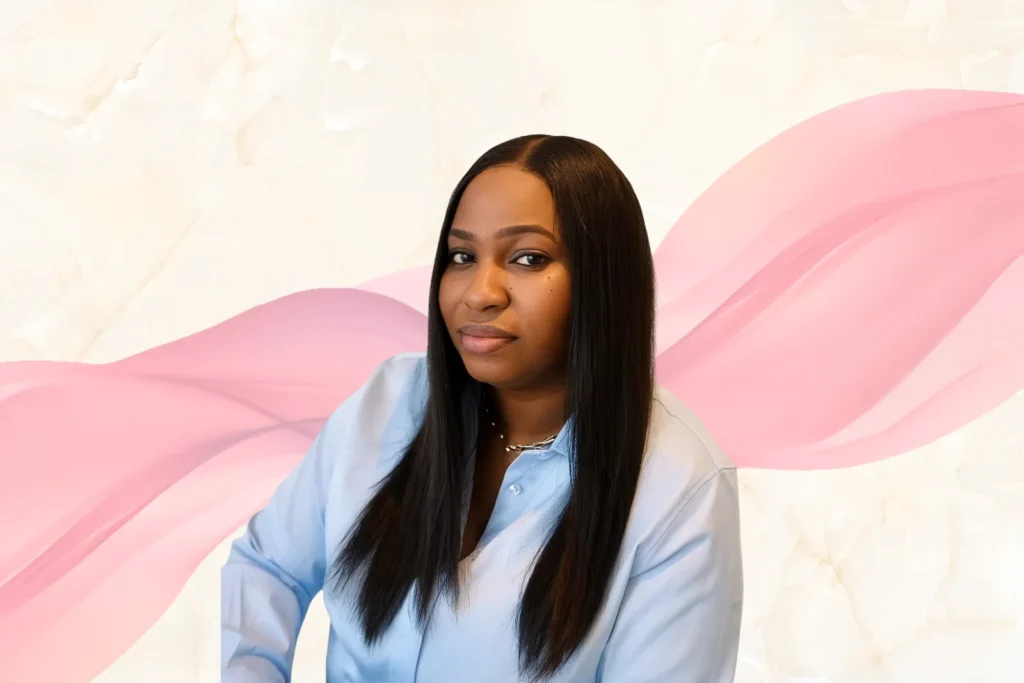
Kehinde Ejukorlem is a digital transformation and product innovation leader with over 15 years of experience driving technology-enabled growth across healthcare, finance, and emerging digital ecosystems. She has contributed to the growth of organizations such as AXA Health, Avon HMO, InvestNaija, and Access Bank, consistently operating at the intersection of business strategy, user experience, and data intelligence. She also played a key role in the MTN Nigeria Public Offer, helping build a digital-first investment platform that expanded retail participation in Africa’s capital markets. Currently shaping digital strategy in the UK health sector, she brings expertise across marketing, product development, project management, artificial intelligence, and enterprise design thinking, while actively mentoring startups and advocating for greater female representation in technology leadership.
All Content Rights Reserved by Catalyst.