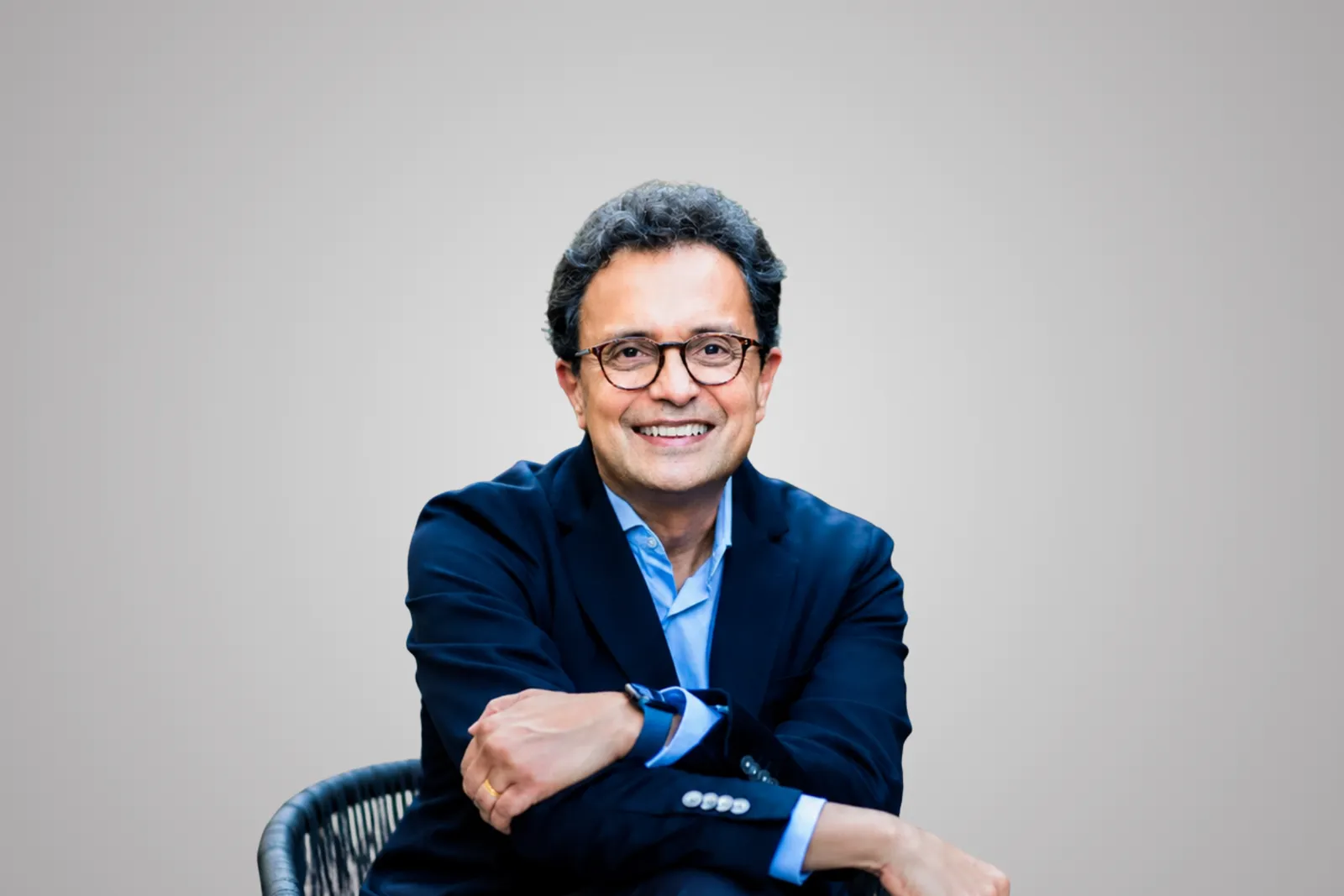



In this exclusive interaction with Catalyst, Prof. Montasir Qasymeh, Associate Provost for Research, Innovation, and Academic Development at Abu Dhabi University, shares insights into the university’s vision for research commercialization, the role of ADU Innovate in strengthening industry collaboration, and how emerging technologies and homegrown innovation are contributing to the UAE’s long-term technological leadership and economic transformation.
How is Abu Dhabi University redefining the relationship between academia and industry through initiatives like ADU Innovate?
Through ADU Innovate, Abu Dhabi University is actively repositioning academia as a direct enabler of industry innovation rather than a traditional knowledge provider. Our participation in platforms such as Make it in the Emirates reflects a deliberate strategy to accelerate the transition of research into commercialization-ready solutions. By engaging industry leaders, government entities, and investors, we are creating structured pathways for collaboration, ensuring that student- and faculty-led innovations are not only conceptually strong but also scalable and applicable to real industrial needs. This model strengthens the UAE’s innovation ecosystem by embedding industry relevance at the core of academic research.
What changes are needed in higher education to prepare students for industries driven by AI, robotics, and quantum technologies?
Higher education must move further towards experiential, application-driven learning models that integrate emerging technologies into both curriculum and research environments. The UAE’s vision for higher education focuses on cultivating a ‘future-ready’ workforce capable of leading a knowledge-based economy, guided by the National Strategy for Artificial Intelligence 2031 and UAE Vision 2031.
At Abu Dhabi University, we are already embedding this vision through hands-on innovation platforms, incubation programs at our Innovation Center, and the university’s annual Research and Innovation Competition led by the Research Office, including the Product Development Grant Program which support both faculty and student innovators. By engaging students directly in AI, robotics, quantum computing, and sustainability-driven projects, we ensure graduates are not only technically proficient but also industry-ready, with the ability to work on real-world challenges.
Quantum computing, AI, robotics, and sustainability were central to ADU’s showcase this year at MIITE. Which of these technologies do you believe will have the biggest long-term impact on the region?
The convergence of AI, robotics, quantum computing, and sustainability is accelerating scientific discovery and transforming how businesses and societies operate. Quantum computing is expected to have a transformative long-term impact due to its potential to redefine computational power, cybersecurity frameworks, and large-scale data processing. With AI and smart systems, it will ultimately drive the most significant regional transformation, particularly in advanced manufacturing and digital infrastructure. At Abu Dhabi University, this is an area of growing strategic focus, which is reflected in our 35 US patents including 20+ in fields of quantum technologies and AI, which continue to advance the university’s contribution to the emerging technology ecosystem.
Can you elaborate on the vision behind Q1RAM and its potential applications across industries?
Q1RAM, a quantum main memory system developed at Abu Dhabi University, is designed to significantly enhance processing efficiency in quantum computing environments. Its vision is to address fundamental limitations in data handling and computational speed in next-generation systems. Potential applications span artificial intelligence, cybersecurity, and large-scale data processing, where performance, speed, and security are critical.
Following the successful proof of concept and patent protection phase, the focus is now on developing a market-ready platform and advancing toward developing a minimum viable product (MVP). From there, the roadmap will focus on identifying high-value application areas, securing early adopters and customers, and scaling the technology vertically and horizontally across multiple industries and markets.
How does ADU identify which research projects have the potential to scale commercially or attract industry investment?
At Abu Dhabi University, projects are assessed based on their alignment with national priorities, industrial relevance, scalability potential, and applicability to real-world challenges. This process is guided by a dynamic evaluation framework implemented by the university’s Innovation Center, which is also supported by both the steering and technical committees comprising academic and industry experts. Through ADU Innovate and engagement with industry stakeholders at platforms like Make it in the Emirates, we actively test market interest, viability and feasibility early in the development cycle. This ensures that only high-impact, commercially viable innovations progress toward potential investment or industry adoption.
In what ways can universities contribute to strengthening the UAE’s economic diversification and technological sovereignty?
Universities play a critical role in enabling economic diversification by developing homegrown technologies, building national talent, and accelerating innovation in strategic sectors. At Abu Dhabi University, we contribute by advancing research in robotics, smart systems, quantum computing, and sustainability, while ensuring these solutions are aligned with the UAE Industrial Strategy (Operation 300bn). This supports the transition towards a knowledge-based economy and strengthens technological sovereignty through locally developed innovation capabilities. Importantly, today’s students and young researchers are not just future participants in this ecosystem, they are already the architects of tomorrow’s economy, actively shaping and designing its foundations through applied innovation.
What is your long-term vision for Abu Dhabi University in the global research and innovation landscape?
Our long-term vision is to position Abu Dhabi University as a globally recognized hub for applied research and innovation, where academic excellence is translated directly into industrial and societal impact. We aim to deepen our role as a connector between academia, government, and industry, while expanding our contribution to emerging technology ecosystems regionally and globally.
Supporting this vision is a growing network of partnerships with world-class universities and their innovation centers, alongside collaborations with national and international corporate and government entities. These partnerships are enabling greater knowledge exchange, accelerating research commercialization, and strengthening Abu Dhabi University’s role within the global innovation landscape.
About the Contributor
Professor Montasir Qasymeh is an academic executive, strategic innovator, and Professor of Electrical Engineering at Abu Dhabi University. He currently serves as Associate Provost for Research, Innovation, and Academic Development, where he leads university-wide initiatives in research excellence, innovation, commercialization, and global partnerships. He has played a key role in advancing ADU’s research ecosystem, including the establishment and growth of interdisciplinary research institutes in Sustainable Futures, AI and Emerging Technologies, and Cancer and Health Innovation.
His leadership has also contributed to expanding ADU’s innovation capacity, with the university’s portfolio reaching 37 granted patents and more than 60 additional patents in the pipeline. Under his leadership, ADU has witnessed expedited growth in research publications, exceeding 5,000 publications and reflecting the university’s growing research productivity, quality, and global visibility. As a researcher, his work focuses on nanoplasmonics, terahertz engineering, graphene-based technologies, and advanced quantum systems. He has authored and co-authored more than 85 peer-reviewed publications and is the inventor of 19 granted U.S. patents.
All Content Rights Reserved by Catalyst.