


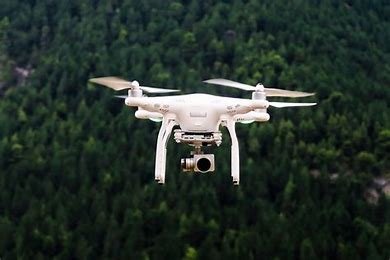
As drone technology evolves in terms of camera quality, flight stability, and artificial intelligence integration, the future of drone technology appears to be brighter than ever.
One Technology and Many Forms
In general, consumer drones are used for recreational purposes and are the most common type. Speed and agility are the hallmarks of racing drones. Pilots use them in competitive drone racing, an industry growing rapidly. Drones designed for professional use are used in fields such as filmmaking, agriculture, and surveying. Many of these drones are equipped with advanced features such as obstacle avoidance, long flight times, and superior camera capabilities.
Drones used in the industrial sector are used for a wide range of purposes, including infrastructure inspections, search and rescue operations, and environmental monitoring. Drones of this type are typically larger, more durable, and equipped with specialized sensors and cameras.
A nano drone is a small, lightweight aircraft that is commonly used for indoor flight and for basic aerial photography. Despite their limited features, they are ideal for casual use in confined areas due to their compact size.
Market Insights
Among the leading drone manufacturers in the world, DJI, Autel Robotics, AeroVironment, and Delair are among the most prominent. DJI holds a significant percentage of the market, ranking first overall.
The Drones market in India is poised for steady growth, with projected revenue reaching US$28.7 million in 2025. This sector is expected to grow at a compound annual growth rate (CAGR) of 5.58% between 2025 and 2029. On a global scale, China dominates the market, leading in revenue with a projected US$1.6 billion in 2025. Looking ahead, the market volume in India is forecasted to reach approximately 79.6 thousand units by 2029, reflecting rising adoption and demand across various sectors, as per Statista 2024 Report.
Recent Innovations with Drone
India got its first and successful drone delivery. In Bengaluru, Skye Air has launched a commercial drone delivery service. It is currently available in Konankunte and Kanakapura Road areas, and delivery takes only seven minutes. The UAE has introduced a first-of-its-kind drone delivery system in Dubai Silicon Oasis, a demonstration of the potential for drones to be used in logistics and urban delivery. Dronamics, a European company, has developed a fixed-wing cargo drone, the Black Swan, capable of carrying 350 kg of cargo over a 2,500 km range, connecting most of Europe. BRINC Drones is pushing the boundaries of drone technology to create systems that can fly indoors, provide 2-way communication, and assist first responders in dangerous situations.
Governance and Innovation
Governments around the world are actively shaping the future of the drone industry through progressive policies, strategic investments, and regulatory reforms. In India, multiple initiatives have been launched to position the country as a global drone hub by 2030. The Production-Linked Incentive (PLI) scheme, for instance, aims to promote indigenous drone production and strengthen the manufacturing landscape (source: Press Information Bureau)
Similarly, other countries are embracing innovation in drone governance. The United States Federal Aviation Administration (FAA) continues to refine its regulations to safely integrate drones into national airspace, while providing support for commercial drone operations. In Europe, the European Union Aviation Safety Agency (EASA) has established a unified regulatory framework to foster cross-border drone operations and innovation. Countries like China and Japan are investing heavily in research and development to boost autonomous drone technologies and industrial applications. These global efforts reflect a shared commitment to harnessing the potential of drones while ensuring safety, security, and sustainability in their integration into everyday life.
Drones in Major National Events
Drones are increasingly redefining the art of large-scale entertainment across the world. To celebrate AC Milan’s 125th anniversary and the first year of Casa Milan Dubai, Cyber Drone created an awe-inspiring drone light show featuring 1,000 drones. Set against the iconic skyline of Dubai, with its glittering skyscrapers and waterfront reflections, the location amplified the grandeur of the spectacle.
Around the world, drone shows are becoming a highlight at major cultural and national events. In the United States, events like the Super Bowl and Fourth of July celebrations have featured breathtaking drone performances that captivate audiences with synchronized aerial choreography. China, a leader in drone technology, continues to set world records for the largest drone displays, often featuring thousands of drones illuminating the night sky during national holidays and tech expos.
In India, drones have become a centerpiece at some of the country’s biggest events. The Republic Day celebrations in 2022 featured over 1,000 drones, showcasing the nation’s advancements in unmanned aerial technology. Additionally, drone light shows were used to enhance the visual experience at the G20 Summit in 2023 and are planned for the Mahakumbh in 2025, where over 2,000 drones are expected to light up the sky.
Challenges and the Road Ahead
As exciting as the rise of drone technology is, it’s not without its hurdles. Building drones that are entirely self-sufficient is still a work in progress, with many parts sourced from around the world. High production costs, a shortage of trained operators, and growing concerns about safety and privacy are important issues that need attention.
Regulations, while necessary, sometimes struggle to keep pace with the speed of innovation, creating a fine balance between encouraging new ideas and ensuring secure skies. But the road ahead looks promising. With more investment in homegrown technologies, smarter collaborations between the public and private sectors, and global efforts to build better frameworks, drones are set to become an even bigger part of our lives, changing the way we work, live, and connect with the world around us.
Drones have rapidly evolved from niche technology into a transformative force across industries and everyday life. As innovation accelerates and adoption grows, drones are not only reshaping sectors like agriculture, healthcare, infrastructure, and entertainment but also inspiring new possibilities in logistics, emergency response, and large-scale celebrations. While challenges around production, regulation, and safety remain, global collaboration, strategic investments, and forward-thinking governance are driving steady progress. With a future full of potential, drones are poised to become an even more integrated and impactful part of modern society.
All Content Rights Reserved by The Catalyst.